The Compounding Moat: How Operational Discipline Becomes a Brand Competitors Can’t Copy
A rice miller in Kedah wins on supply security. A herbal scalp clinic wins on quieting a client’s anxiety about aging. A fifth-generation baby oil brand wins on parental peace of mind. None of these businesses win because their product is functionally superior – a competitor can replicate a formulation, undercut a price, or copy a tagline by next quarter. What they can’t copy overnight is the thing sitting underneath the promise: eighteen months of on-time deliveries, zero-error batch records, and a customer history nobody outside the business has access to.
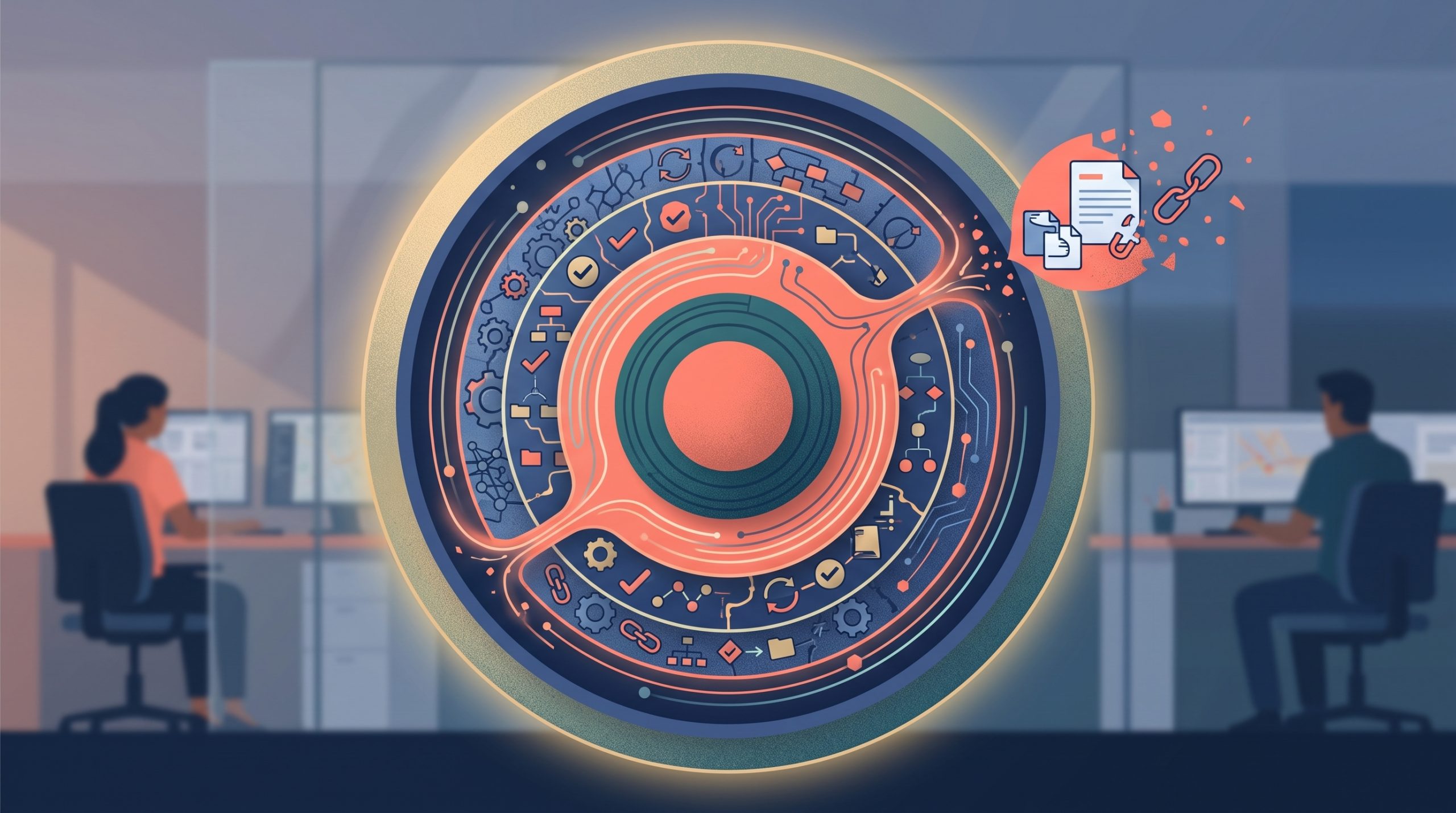
That’s the piece missing from most conversations about differentiation. Identifying the unvoiced emotional value your customer is actually buying is step one. Operationalizing it into your ERP, your QC gates, and your billing logic is step two. What both steps are quietly building, week after week, is step three – a moat that gets harder to copy the longer it compounds. Competitors can match your message. They cannot match your operating history.
Why Can a Message Be Copied Overnight But a Track Record Can’t?
Because a message lives on a website and a track record lives in a database competitors have no access to – one is a claim, the other is evidence accumulated transaction by transaction. Any competitor can read your homepage and rewrite their own to say the same thing about “uncompromising quality” or “guaranteed same-day dispatch.” What they cannot do is retroactively produce three years of lot-traceable delivery records, or manufacture a reference list of clients who will vouch for a promise being kept every single time. A message is a sentence. A track record is thousands of individually verified transactions, and there is no shortcut that compresses that timeline for a competitor starting today.
The Moat Ladder: Four Layers, Each Harder to Copy Than the Last
Not every layer of a value proposition offers the same protection. Ranked from easiest to hardest for a competitor to replicate:
| Layer | What It Is | How Fast a Competitor Can Copy It |
|---|---|---|
| Message | The tagline, the ad copy, the homepage promise | Same day – it’s a sentence anyone can rewrite |
| Product | The formulation, the feature set, the price point | Weeks to months – reverse-engineering and undercutting is routine |
| Process | The QC gates, the delivery workflow, the audit trail | Months to a year – requires rebuilding internal discipline, not just output |
| Data | The accumulated transaction history, traceability records, and customer trust it produced | Cannot be copied – only re-earned, transaction by transaction, starting from zero |
Most SMEs invest almost entirely in the top layer – better copy, a sharper brand, a louder campaign – because it’s the fastest lever to pull. It’s also the layer with the least defensibility. The businesses from the five case studies that actually hold their ground long-term are the ones where the message is simply the visible tip of a process layer running underneath it: a rice miller whose 3,000-ton milling capacity backs up every claim of supply security, a baby oil brand whose GMP and Halal certification back up every claim of safety.
What Compounds, Concretely
Traceability Becomes a Sales Asset, Not Just a Compliance Requirement
Every batch tracked from raw material to delivery isn’t just a defensive record for an audit – it’s a growing body of proof a sales team can point to. A competitor claiming the same quality standard has to ask a prospect to take their word for it. A business with two years of lot-level traceability can show the prospect the actual record.
Billing Accuracy Becomes a Retention Lever
A customer who has never received a disputed invoice in three years of working with you has quietly stopped shopping your competitors on price, because the operational friction of switching – re-establishing that same level of trust with someone new – is now a real cost they’d have to absorb. Zero-dispute billing isn’t just an efficiency metric; it’s switching-cost armor that accumulates with every clean invoice cycle.
Referenceable History Becomes Harder to Manufacture Than Product
A new entrant can source a comparable ingredient or spec a comparable product within a season. They cannot produce a client who has trusted them through five years and a dozen order cycles – that reference only exists on the timeline it took to build, and no amount of funding compresses it.
How MoxogoERP Turns Operational Discipline Into a Compounding Asset
The moat only compounds if the operational data is actually being captured, structured, and made retrievable – not scattered across paper checklists, WhatsApp threads, and someone’s personal spreadsheet, where it can’t be pointed to and effectively doesn’t exist as an asset. A unified data architecture connecting CRM, inventory, quality control, and accounting means every clean transaction, every passed QC gate, and every on-time delivery becomes a permanent, queryable record instead of a one-off event nobody can retrieve six months later.
That’s the same principle behind Moxogo’s CRM & Sales module, which keeps a full history of every touchpoint against a client record rather than letting it fragment across inboxes, and Inventory & Warehouse, where lot-level traceability is captured as a byproduct of normal operations rather than reconstructed under pressure during an audit. The moat isn’t a separate initiative – it’s what accumulates automatically once the operational discipline from your daily workflow is running through one connected system instead of ten disconnected habits.
Frequently Asked Questions
Why is operational discipline a stronger competitive moat than branding? Because branding is a claim that any competitor can rewrite immediately, while operational discipline is evidence accumulated transaction by transaction over time – a track record that cannot be backdated or purchased, only built.
What is the “Moat Ladder”? A ranking of four layers of a value proposition – message, product, process, and data – from easiest to hardest for a competitor to copy. Message can be copied in a day; accumulated operational and traceability data cannot be copied at all, only re-earned from zero.
How does an ERP system contribute to building a competitive moat? By capturing every transaction, QC check, and delivery as a structured, retrievable record instead of letting it scatter across spreadsheets and chat threads – turning routine operations into a growing body of evidence a business can actually use.
Can a well-funded competitor shortcut this kind of moat? Not the data layer specifically. Funding can buy better marketing, faster manufacturing, or aggressive pricing almost immediately, but it cannot buy three years of verified delivery history or a client base that has already tested and trusted the business over time.
Where should an SME start if they want to build this kind of moat? By identifying which operational promise their customers value most, then checking whether that promise is currently backed by a structured, retrievable record or just by staff memory and goodwill – the gap between the two is exactly where the moat is currently leaking.
Willie is the Managing Director of Mxgsoft Pte Ltd, a Singapore-based digital transformation company specialising in ERP implementations, workflow automation, and AI-powered business solutions.
Next step: Pick the one operational promise your business makes most often to customers, and check whether it currently produces a retrievable record or only lives in staff memory. Wherever the record doesn’t exist yet, that’s the exact point where a competitor could still catch up – and where the next quarter of system discipline should be spent.
More Articles

The Resource Master Audit: Why ERP Rollouts Fail at the Data Layer, Not the Software Layer
Most ERP go-lives don’t fail on features. They fail on messy master data. Here’s the Resource Master Audit that prevents it.
Read Article
Engine and Brakes: What the Global AI Safety Debate Means for Your Business
A recurring metaphor in the global AI safety conversation, a powerful engine paired with good brakes, turns out to describe SME AI adoption just as we...
Read Article
No, They Are Not Banning Your Home AI Server: What the Ban Artificial Superintelligence Act Actually Says
A video claiming home AI servers are about to be banned by federal law is spreading. There is a real bill behind it, the Ban Artificial Superintellige...
Read Article