
The Token Economy: How the Shift from Instructions to Intelligence Is Rewriting the Rules of Software, and Your Career
There is a number floating around Silicon Valley that sounds like it belongs in a science fiction novel: $20,000 a month for an AI employee. OpenAI is reportedly planning it. If your first reaction is sticker shock, you are asking the wrong question. The real question is not whether you can afford a $20,000 AI employee. The real question is whether you understand that the fundamental unit of computing has just changed, and what that means for your career, your company, and the software industry as a whole.
Here is what is actually happening. Across OpenAI, Anthropic, Google, and every AI native organisation worth paying attention to, the new unit of work is the token. Not the instruction. Not the line of code. Not the Jira ticket. The token. That shift, quiet, unglamorous, almost invisible if you are not looking for it, is rewriting the job of software engineering faster than anything we have seen in sixty years. And for those of us running digital transformation projects for SMEs here in Singapore, it is rewriting how we scope, price, and deliver work too.
From instructions to intelligence: a sixty year shift in eighteen months
To appreciate how radical this is, you need to understand what the old paradigm actually looked like, and how deeply it shaped every assumption we have ever made about software teams, developer careers, and organisational design.
For six decades, the fundamental unit of computing was the instruction. A human wrote code. A machine executed code. The value of a developer was denominated in how cleverly they could sequence those instructions, one function at a time, one ticket at a time. The developer’s job was translation: take business logic, convert it to machine logic, repeat until the product ships.
That era is done. The unit of work is now the token, a unit of purchased intelligence.
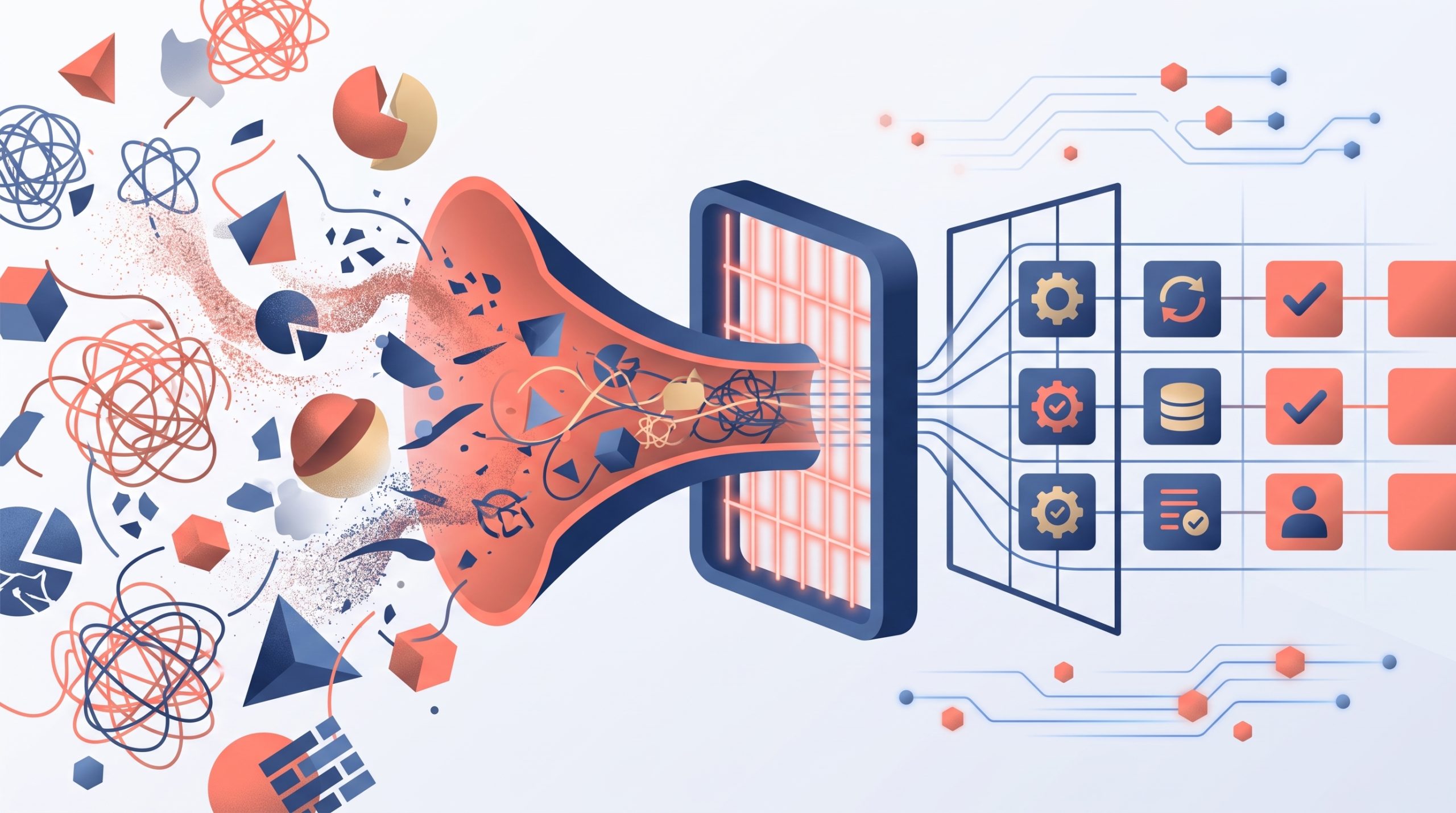
You do not tell the machine what to do step by step anymore. You describe what you want. You feed it context. You buy enough intelligence to get a result. The machine figures out the workflow steps on its own. We call this inference. The human’s job has fundamentally shifted, from writing logic to specifying outcomes and managing the intelligence budget that produces those outcomes.
This is not a tools upgrade. This is not a software update. This is a change in what computing is. Once you see it, you cannot unsee it. And once you have watched an Odoo module get scoped, built, and tested in an afternoon by an agent that would have taken a junior developer three days a decade ago, you stop thinking of it as a productivity hack and start thinking of it as a different kind of factory.
The numbers that are anchoring a new paradigm
Abstract paradigm shifts are easy to dismiss. Numbers are harder to ignore. So let us look at the numbers, because they tell a striking story, and some of them have moved even further since they were first reported.
In early 2026, StrongDM’s co-founder and CTO Justin McCarthy published the charter his three-person AI team built its “software factory” around. The rule that got the most attention: if you are not spending at least $1,000 in token costs per human engineer per day, your software factory has room for improvement. No human writes the code. No human reviews the code. Humans write specifications, curate test scenarios, and watch the scores. That is not a research experiment. That is security infrastructure, the kind of software where bugs have real consequences, shipping to production under a policy that most engineering leaders would have called reckless two years ago. StrongDM was acquired by Delinea in 2026, and the “no human reviews code” charter is now part of due diligence conversations happening across the industry, not just a blog post.
Cursor, Anthropic’s single largest customer and a coding editor that crossed $1 billion in annual recurring revenue in late 2025 and roughly $3 billion by mid 2026, watched its AWS bill explode from $6.2 million in May 2025 to $12.6 million in June 2025, more than doubling in a single month. That spike coincided with Anthropic introducing new priority service tiers. When your primary input cost doubles in a month, you have a token economics problem, not a headcount problem. Cursor’s own investors have pointed out that at points in 2025 the company was paying Anthropic more for tokens than it was collecting in subscription revenue, a negative gross margin business model that only makes sense if you believe the price of intelligence keeps falling faster than your consumption grows. Cursor’s response has been telling. Rather than simply raising prices, they built and shipped their own proprietary coding model, Composer, specifically to claw back margin from the API bill.
Anthropic itself spent $2.66 billion on Amazon Web Services through September 2025, against an estimated $2.55 billion in cumulative revenue over the same period. More than one hundred percent of Anthropic’s top line revenue went straight to AWS, before even accounting for Google Cloud spend. These companies are not making a mistake. They are operating under a different physics of compute, one where intelligence is a purchasable commodity with a price curve and a consumption curve, and where the bet is that the price curve falls fast enough that unit economics eventually turn positive.
And the price curve really has been falling. Per token inference costs have dropped at rates that make Moore’s Law look conservative, somewhere between 10x and 200x annually depending on the task and model generation. GPT-4 equivalent performance cost roughly $20 per million tokens in late 2022. Claude Sonnet 4.5 runs at $3 per million input tokens today. Give it another year or two and that number will likely be in the cents. Meanwhile the average organisation now spends around $85,000 a month on AI, up 36 percent year over year, and the share of organisations planning to spend over $100,000 a month has roughly doubled.
This is Jevons’ Paradox playing out in real time. When a resource gets cheaper, you do not use less of it. You use vastly more of it. Steam engines got more efficient and coal consumption exploded. Cloud computing got cheaper and AWS bills went up. AI inference costs are collapsing and token consumption is going parabolic.
The new scarce resource: knowing how to aim intelligence
In the old paradigm, the scarce resource was developer time. You hired engineers, gave them tools, and the bottleneck was how many hours of skilled labour you could deploy. Management was headcount planning, recruiting, retention, all the machinery of human capital management.
In the new paradigm, the scarce resource has moved. It is now the ability to convert tokens into usable economic value.
Raw intelligence is abundant and getting cheaper every month. What is scarce is knowing how to aim all of those tokens, how to structure context, how to route tasks to the right model at the right cost, how to build agent loops that sustain quality over time, and how to measure whether the intelligence you are purchasing is actually producing the outcomes you need. Call it token management. Call it intelligence operations. Call it context engineering. The name does not matter. What matters is that it is a real skill, it is measurable, and organisations that build it are pulling away from everyone else.
The enterprises that have figured this out are building internal platforms that route work to the right model at the right price point. They negotiate custom API agreements with hyperscalers, committing to consumption floors in exchange for dedicated capacity and volume pricing. A16Z’s Enterprise AI survey found that average enterprise LLM spend hit $7 million in 2025, with projections pointing past $11 million in 2026. That spending has shifted from innovation budgets into core IT infrastructure, from “let’s explore” to “this is critical for our business.”
Cursor’s story is a cautionary tale of what happens when you do not master token economics early enough. When Anthropic changed its pricing structure, Cursor’s costs became briefly uncontrollable. They had to gut their $20 a month unlimited plan and introduce usage based credits and a $200 a month tier, and users revolted publicly for weeks. The lesson generalises well beyond one coding editor: token economics is now a core business competency, and companies that do not figure it out are one supplier pricing change away from a crisis. Cursor’s own fix, building a proprietary model to regain control of unit economics, is the same instinct that is now showing up in how the largest enterprises negotiate with model providers, and it is worth SME owners noting, because the same dynamic applies at a smaller scale to anyone building a product on top of someone else’s API.
Three developer career paths in 2026
Here is where the conversation gets personal for anyone who writes software for a living, or manages people who do. The standard narrative has been binary: AI replaces the developer, or it does not. That framing is not helpful. What is actually happening is that the developer role is differentiating rapidly into at least three distinct tracks, with very different skill requirements, very different compensation dynamics, and very different career trajectories.
Track one: the orchestrator. The orchestrator does not write code. The orchestrator specifies outcomes and manages the intelligence that produces those outcomes. Think of the StrongDM model, a three-person team targeting thousands of dollars a day in tokens, building production systems without handwriting code. Core skills for this track are system design, specification writing, quality evaluation, and token economics. These developers think in terms of agent architectures, context windows, eval frameworks, and cost per outcome. They are effectively factory managers with intelligence instead of machinery. Their value scales with the volume of intelligence they can direct, meaning their compensation will eventually correlate with token budgets rather than lines of code.
Track two: the systems builder. The systems builder constructs the infrastructure that orchestrators use, the agent frameworks, evaluation pipelines, context management systems, and routing layers that send the right task to the right model at the right cost. This is deep technical work, closer to traditional systems engineering than application development, but on an entirely new stack. Systems builders need to understand model behaviour at a mechanical level: how context windows affect output quality, how different architectures handle different task types, how to build reliable systems on top of probabilistic components. This track is smaller in volume and far more specialised, but the compensation ceiling is extremely high because the leverage these developers wield is company wide.
Track three: the domain translator. This is the track almost nobody is talking about, and it may be the largest of the three. These are the developers, or increasingly the non-developers, who combine enough technical fluency to work with AI systems and enough deep domain expertise to know which problems are worth solving in a specific market. The dental practice management specialist is now a developer. The construction scheduling expert is now a developer, although they may not know it yet. Their value is not in managing tokens or building infrastructure. It is in their ability to point intelligence at the right problem in the right market with the right context. And that value is going up as intelligence gets cheaper, because cheaper intelligence makes more niche problems economically viable to solve. This is the track I see most clearly from where we sit at Mxgsoft, working with SMEs across Singapore who understand their industry cold but have never had the budget for a dedicated engineering team.
Who gets rich, who becomes obsolete
The career implication is stark. The middle of the old software engineering distribution is most exposed, the developer who writes competent application code but lacks either deep systems expertise or deep domain expertise. Not because AI will replace them tomorrow, but because the value of generic code production is going to zero at roughly the same rate as the cost of tokens.
Being AI assisted is not enough. Using Copilot or Cursor to write code faster is not enough if the underlying value proposition, producing generic application code, is the thing being commoditised.
The developers who thrive will be the ones who move decisively toward one of these three tracks, ideally the track that best matches their existing strengths and interests. But regardless of which one, you need to pick one, because the only clear path that does not work is continuing to do what you are already doing, just slightly faster with AI tools.
The construction specialist who realises they are now a developer, and learns enough AI fluency to act on that realisation, is going to be very valuable. The orchestrator who manages agents doing production grade work is going to be very valuable. The systems builder constructing evaluation infrastructure that enterprises depend on is going to be very valuable. The generic application developer who does not specialise is on the path of decreasing leverage, and that decline compounds every quarter that inference gets cheaper.
The market split: scale versus precision
The software market is splitting, but not simply into haves and have nots based on token budget. At the top are enterprises and well funded AI native companies competing on token volume, building horizontal platforms, running agents on broad workflows that every large organisation shares. Their advantage compounds with every model upgrade. Their moat is capital and infrastructure.
But across the enormous and rapidly expanding surface area of the rest of the market, builders can win on specificity, the sharp angle, the niche market, the customer relationship that no amount of token spend can replicate. Their advantage compounds with domain knowledge. Their moat is distribution and trust.
Goldman Sachs can run more inference than any startup. Goldman cannot sell AI powered inventory management to a fifty location restaurant chain, because Goldman never built a distribution channel for that market. The founder who knows that market deeply, who has the relationships and the context, who can point a $200 a month Claude subscription with precision, can create more downstream value in that niche than a $20,000 a month enterprise AI budget pointed at the wrong problem.
The paradigm shift does not pick a winner between these two strategies. It makes both more powerful, and it widens the gap between either strategy and the old model where everything was denominated in developer time.
What this means for Singapore SMEs specifically
This is where the abstract turns concrete for the businesses we work with every day. Most SMEs in Singapore were never going to compete with a global enterprise on token volume, and that was never the plan. What has changed is that the domain translator path, track three above, has just become dramatically more accessible.
A logistics company that has spent fifteen years learning the quirks of Southeast Asian customs clearance now has a real opportunity to encode that knowledge into an AI powered workflow at a fraction of what it would have cost to build custom software three years ago. A retail chain that understands its customers’ buying patterns better than any outside vendor ever could can now build a recommendation and inventory system on top of a few hundred dollars a month of API spend, not a six figure enterprise software contract. An events venue that knows exactly how a wedding banquet timeline actually runs, versus how a generic event management SaaS assumes it runs, can now have that judgement built directly into its operations software.
This is not a theoretical argument. It is the same shift we have been navigating directly in our own ERP and automation work on the MoxogoERP platform, where the leverage increasingly comes from how precisely we can encode a client’s actual operating knowledge into a workflow, not from how much raw computing power we throw at the problem. The token economy rewards exactly the kind of deep, unglamorous domain knowledge that Singapore SMEs have accumulated over decades and rarely thought of as a technology asset.
The practical takeaway for an SME owner reading this is not “go hire an AI orchestrator.” It is closer to: audit what your business knows that a generic software vendor does not, because that knowledge is now the input that determines whether cheap intelligence turns into real value or into an expensive, poorly targeted experiment.
The question you should be asking
When you see a headline about a $20,000 a month AI employee, or a three-person team spending thousands of dollars a day on tokens, the question you should be asking is not whether you can afford that. The question is whether you understand that computing as a paradigm is changing, and where you are positioning yourself in response.
Are you positioning your career, your company, your product for a world where tokens are the fundamental material of computing? Are you building skills in orchestration, in systems architecture for AI, in deep domain expertise combined with AI fluency?
Intelligence is becoming a commodity. The price is falling. The consumption is exploding. The organisations and individuals who figure out how to aim that intelligence at the right problems, with precision, with domain expertise, with the right context, are going to compound their advantage every month. The ones still writing competent application code and calling themselves AI assisted are going to find, gradually and then suddenly, that the value of that work has gone to zero.
Key takeaways
- The unit of computing has changed. Instructions used to be the fundamental building block of software. Tokens are now. That is a change in what computing is, not a new tool bolted onto the old model.
- Cheaper intelligence means more of it gets used, not less. Jevons’ Paradox is playing out across the industry. Falling per-token costs are driving exploding total consumption, not shrinking AI budgets.
- The scarce resource moved from developer hours to aiming ability. Knowing how to structure context, route tasks, and evaluate output quality is now the differentiating skill, not raw coding speed.
- Pick one of three developer tracks. Orchestrator, systems builder, or domain translator. Staying a generic application developer, even an AI assisted one, is the path of decreasing leverage.
- Domain knowledge is the underrated moat. Singapore SMEs sitting on decades of unglamorous operational knowledge are better positioned in this shift than most people realise, provided that knowledge gets encoded into the systems they use rather than left in someone’s head.
Willie is the Managing Director of Mxgsoft Pte Ltd, a Singapore based digital transformation company specialising in ERP implementations, workflow automation, and AI powered business solutions. This article explores the strategic implications of AI adoption for developers, enterprises, and SMEs across Southeast Asia and beyond.
More Articles
The Resource Master Audit: Why ERP Rollouts Fail at the Data Layer, Not the Software Layer
Most ERP go-lives don’t fail on features. They fail on messy master data. Here’s the Resource Master Audit that prevents it.
Read Article
The Compounding Moat: How Operational Discipline Becomes a Brand Competitors Can’t Copy
Taglines get copied overnight. Clean operational data doesn’t. How operational discipline becomes an unassailable competitive moat for SMEs. ...
Read Article
Engine and Brakes: What the Global AI Safety Debate Means for Your Business
A recurring metaphor in the global AI safety conversation, a powerful engine paired with good brakes, turns out to describe SME AI adoption just as we...
Read Article